
PCP GA: a department design system with an AI agent attached
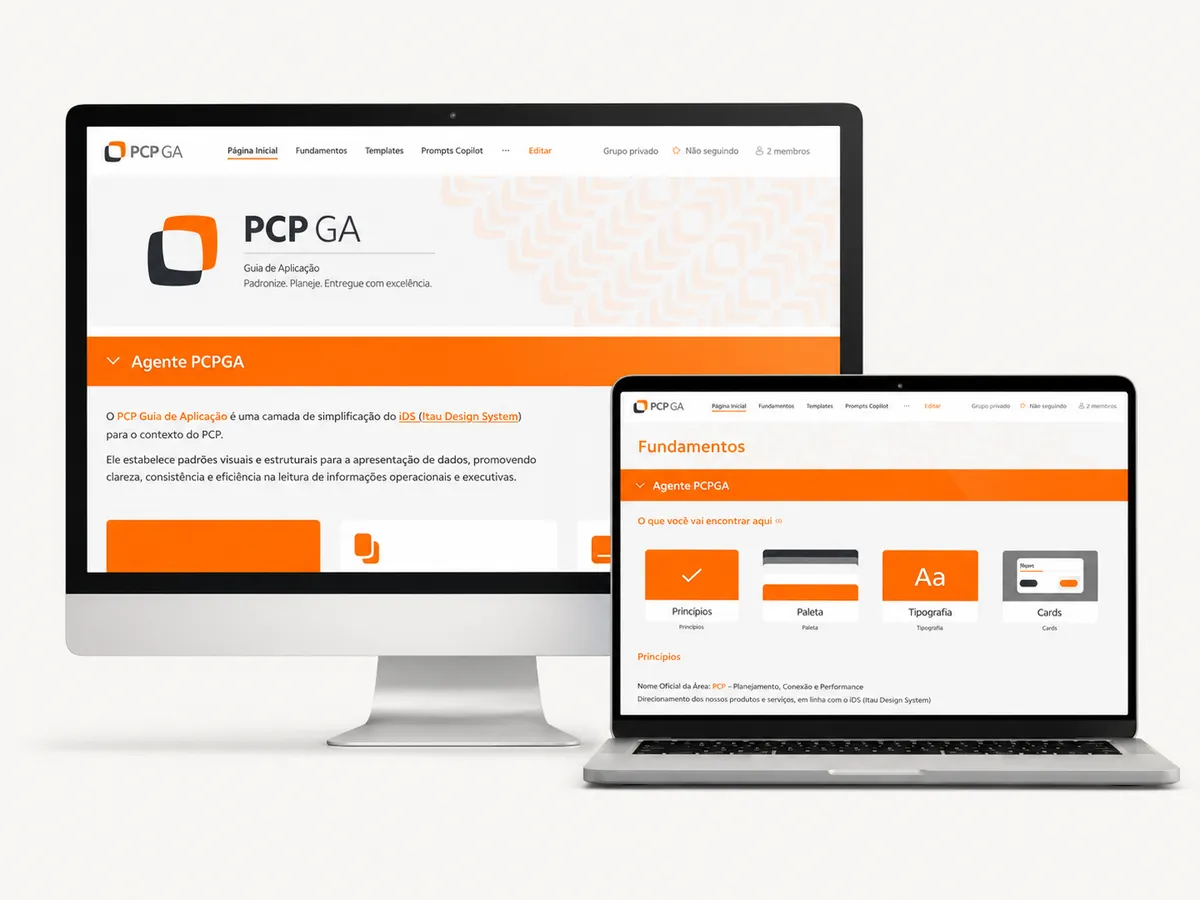
A whole department producing material with no shared standard. I built the application guide in SharePoint and attached an AI agent that helps the team create and fix material inside the standard, without hunting for rules.
- Client
- Itaú
- Sector
- Large bank
- Period
- 2026
- Role
- Design system and applied AI
 SharePoint
 Copilot
 Microsoft 365
 PowerPoint
 Figma
Figma
Corporate work. The figures below are internal adoption estimates, not audited measurement.
The context
An operations department produces a lot of material: board decks, recurring reports, dashboards, announcements. All of it carries the department’s brand, but everyone built theirs from whatever file they happened to have.
The outcome is familiar: two reports from the same department looking nothing alike, and nobody at fault. What was missing was an accessible standard, not goodwill.
What was at stake
Corporate design systems usually fail the same way: they exist, they are documented, and nobody opens them. The documentation sits somewhere the team does not visit at the moment they need it, which is while producing material.
There was also a scale problem. The bank has its own design system, the iDS, but it is far too broad for one department’s daily use. The missing piece was the middle layer: the specific slice that department actually uses.
What was built
Application guide. A SharePoint site with the iDS slice for the department’s context: principles, palette, typography and a card library, each with a usage example and a counter-example.
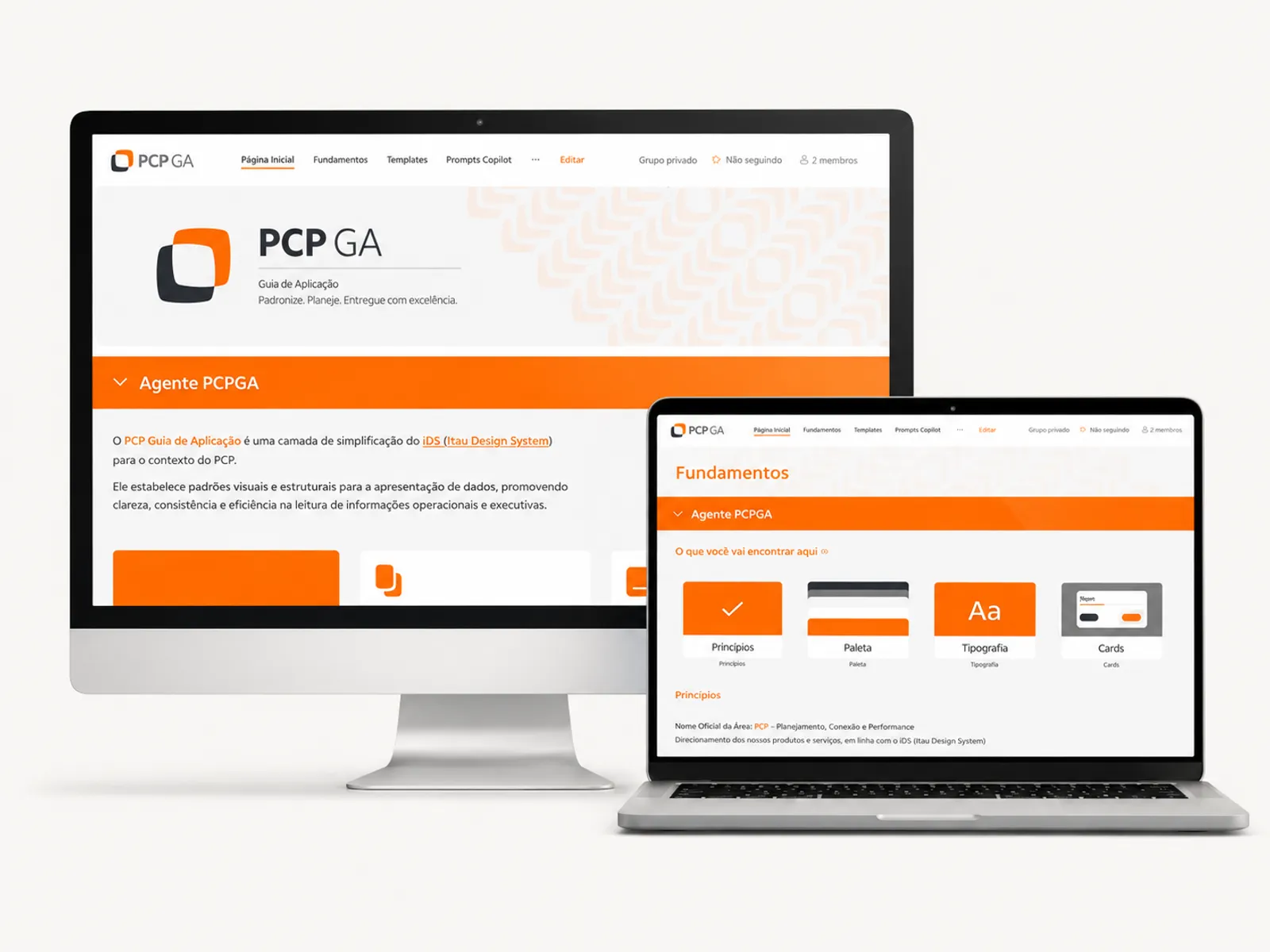
Template library. Ready files for the formats the department actually produces, instead of loose components each person assembles alone.
Attached agent. A Copilot agent fed by the guide’s own content. It answers where the person is already working, and does two things: helps create new material inside the standard, and reviews existing material flagging what falls outside it.
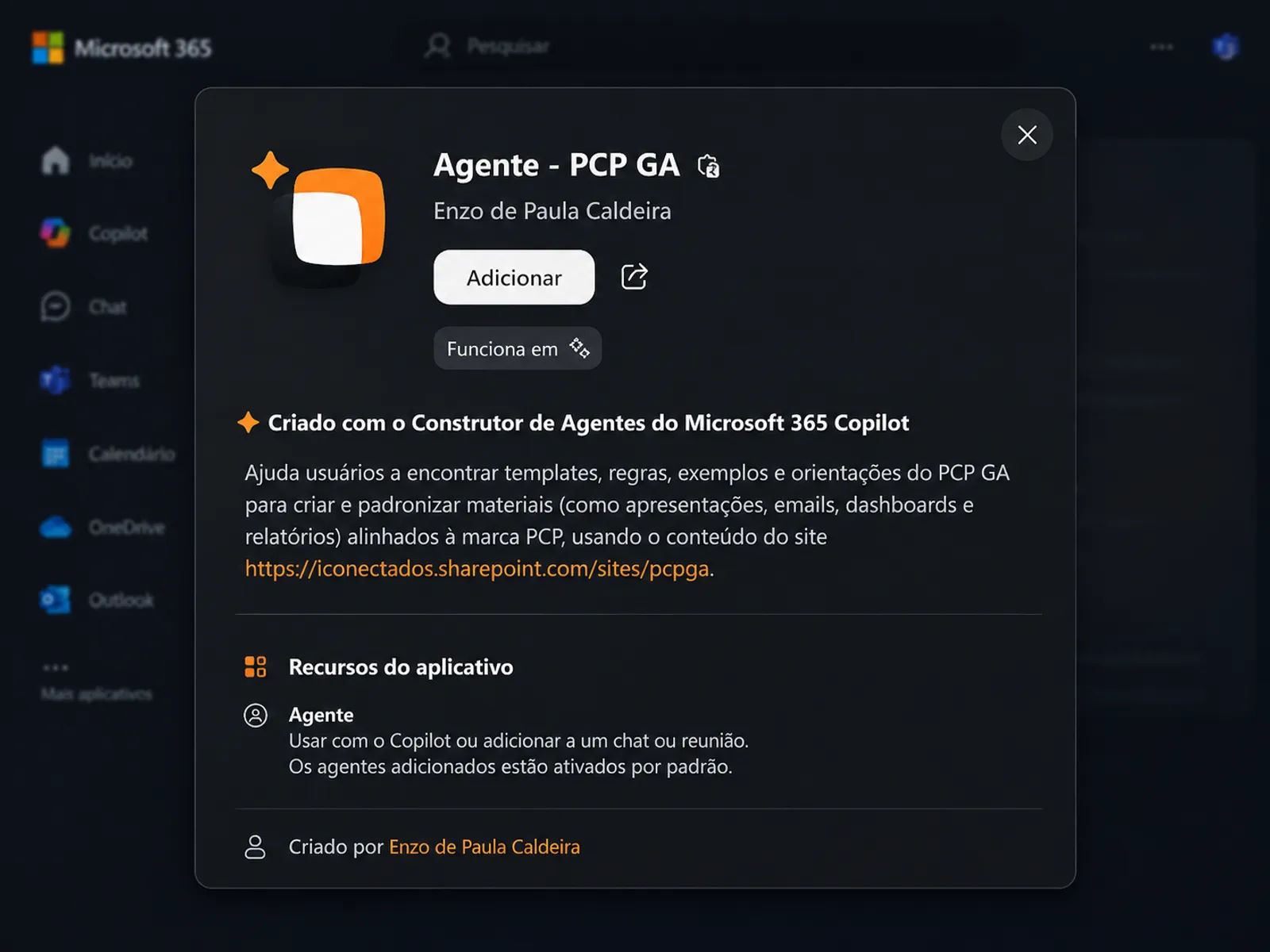
That is the part that changes the game. The standard stops being a document someone has to remember to open and becomes an answer inside their workflow.
Result
Internal adoption figures, estimated over the first quarter of use:
| Indicator | Before | After |
|---|---|---|
| Average time to build a standard deck | ~2h | ~40min |
| Department material matching the visual standard | around 35% | above 80% |
| Guide lookups per week | did not exist | ~60 via the agent |
| Rework from formatting fixes | frequent | occasional |
What I learned
Design systems do not die from lack of quality, they die from access friction. The most complete documentation in the world loses to the file the person already has open.
Attaching the agent to the guide fixed that because it reversed the direction: instead of requiring the person to go to the standard, the standard started going to them. And because the agent reads the guide itself as its source, it never answers differently from what is documented. Updating the guide is updating the agent.